
What Sets the Best Waterproofing Companies in Dayton Apart?
Dayton homeowners seeking reliable basement waterproofing want solutions that stop leaks, protect structure, and preserve indoor air quality — not temporary patches. This article explains what defines the “best” waterproofing companies in Dayton by combining technical explanation, cost context, and decision criteria so you can confidently compare providers. You will learn about Dayton-specific moisture challenges, the mechanics behind interior and exterior systems, realistic cost drivers, and how reviews and warranties should influence your choice. The guide maps common symptoms to targeted services such as interior drainage, exterior membranes, sump pump installation, crack repair, foundation support, and crawl space encapsulation. Finally, it explains how to get a free estimate and what to expect during a professional consultation, with a concise example of local provider capabilities. Throughout, the emphasis is practical: clear problem→service mapping, comparative tradeoffs, and checklists that help you hire a contractor who delivers lasting results.
What Unique Waterproofing Challenges Does Dayton, Ohio Present?
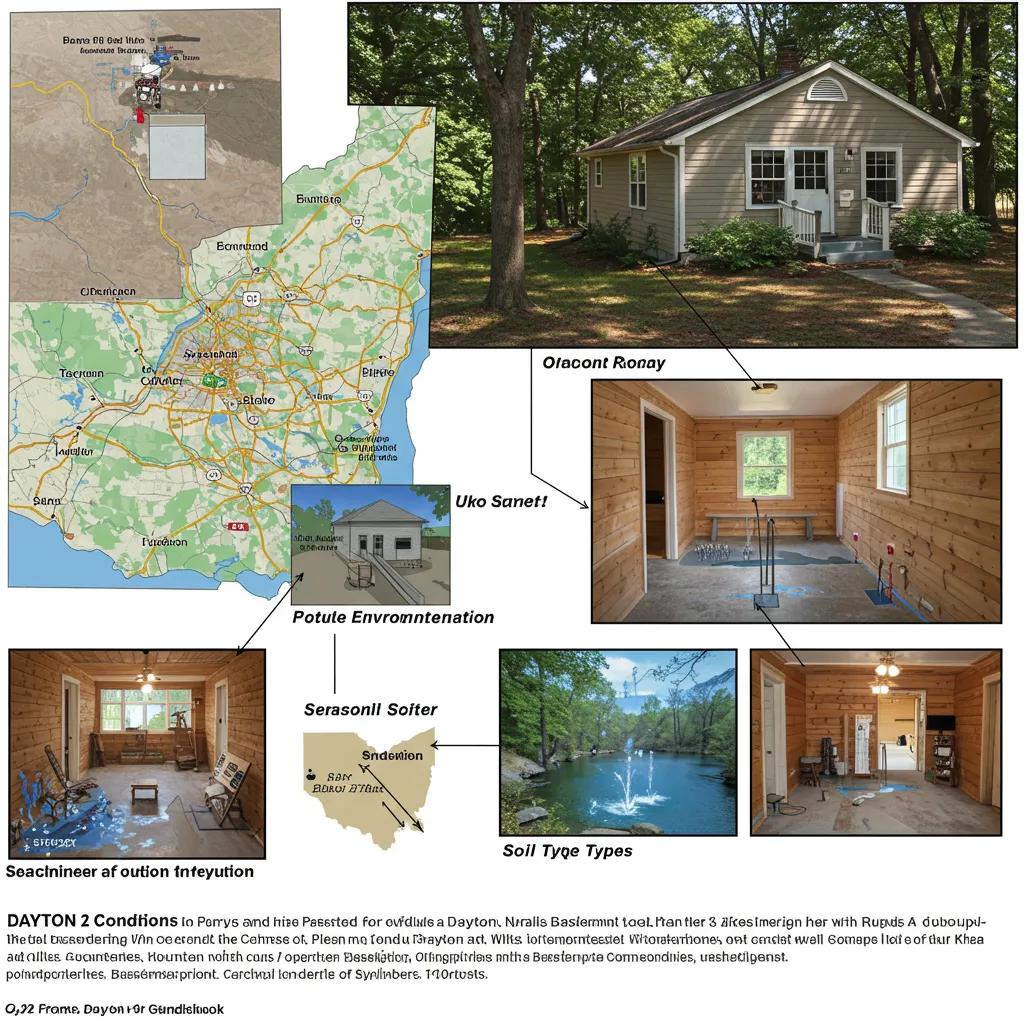
Basement waterproofing in Dayton must address local climate and subsurface behavior that drive water intrusion, soil movement, and humidity problems. Dayton’s seasonal precipitation patterns and freeze–thaw cycles increase the risk of hydrostatic pressure against foundation walls, while certain soil types retain water and expand, forcing water into basements. Understanding these local drivers helps contractors choose between interior mitigation (drainage and sump systems) and exterior solutions (excavation and membrane systems) based on root causes rather than symptoms. The right approach reduces long-term maintenance and protects a home’s structural integrity by controlling groundwater, diverting surface runoff, and managing interior humidity. Recognizing Dayton-specific conditions is the first step toward durable waterproofing that minimizes mold, efflorescence, and repeated service calls.
Understanding the geological and hydrological characteristics of the Dayton area is crucial for effective basement waterproofing.
What Are the Common Causes of Basement Water Damage in Dayton?
Basement water damage in Dayton most often stems from a combination of hydrostatic pressure, foundation cracks, and poor surface or sub-surface drainage that overwhelms systems during heavy rains. Hydrostatic pressure pushes groundwater through joints and hairline cracks, causing seepage even when exterior walls appear intact. Foundation settling and shifting create openings that allow focused water entry and sometimes require structural crack repair or underpinning. Finally, inadequate grading, clogged gutters, or failing exterior drains channel surface water toward foundations, amplifying interior dampness and musty odors. Mapping each observed symptom to a likely cause—seepage, active leaks, or condensation—guides the diagnostic process and the selection of corrective measures.
How Does Dayton’s Climate and Soil Affect Basement Waterproofing Needs?
Dayton’s climate features seasonal rainfall and freeze–thaw cycles that influence both immediate water intrusion and long-term deterioration of foundation materials. Soils with higher clay content retain moisture longer and expand, raising hydrostatic pressure and increasing lateral loads on foundation walls; this favors solutions that manage external groundwater and relieve pressure. Higher regional humidity also raises indoor moisture loads, making vapor barriers, encapsulation, and dehumidification important complements to drainage work. Contractors who factor these local environmental attributes into their recommendations can better estimate system lifespans and maintenance needs, and they can prioritize interventions that reduce recurrence and indoor air quality risks.
What Key Qualities Define Top Basement Waterproofing Contractors in Dayton?
The best Dayton waterproofing contractors combine local geotechnical knowledge with transparent processes and reliable protections for homeowners. Top providers demonstrate a clear diagnostic protocol: site inspection, moisture mapping, cause identification, and a written plan that ties symptoms to specific remedies and expected outcomes. Contractors should hold appropriate state licensing and insurance, offer warranties that align with industry norms, and provide documented references or project photos showing before/after results. Equally important is service breadth — companies that can deliver interior drainage, exterior excavation, crack repair, foundation repair, crawl space encapsulation, and sump pump systems minimize finger-pointing between trades and streamline long-term performance.
- Local knowledge and diagnostic rigor are essential to match solutions to Dayton’s soil and climate.
- Verified licensing and insurance protect homeowners and indicate professional standards.
- Comprehensive service offerings reduce coordination errors and provide single-source accountability.
These qualities form a practical checklist when vetting bids: prioritize detailed written estimates, warranty clarity, and evidence of durable installations. As an example of these criteria applied locally, some Dayton providers highlight their licensing, insurance, free estimates, and flexible payment plans as part of a homeowner-first approach to waterproofing.
Why Is Local Experience and Licensing Important for Dayton Waterproofers?
Local experience equips contractors to interpret Dayton’s soil and climatic signals and to avoid inappropriate fixes that only treat symptoms. A contractor familiar with local freeze–thaw patterns and clay soils will anticipate hydrostatic challenges and recommend pressure-relief strategies rather than surface coatings alone. Licensing and insurance are practical safeguards: licensing demonstrates adherence to local regulatory standards, while insurance transfers liability and protects homeowners during excavation or structural work. Asking for proof of both licensing and insurance helps homeowners verify that the contractor is prepared for the scope of work and accountable if issues arise during installation or beyond.
Which Comprehensive Services Should the Best Dayton Waterproofing Companies Offer?
Homeowners should expect a full-service menu that maps common basement problems to targeted repairs and systems. Effective service portfolios include interior perimeter drainage and sump pump systems to manage groundwater entering the structure, exterior excavation and membranes to prevent water from contacting foundation walls, and targeted crack repair or foundation stabilization when structural issues exist. Crawl space encapsulation combined with dehumidification controls vapor and improves indoor air quality, while French drain installation and proper grading address surface and sub-surface runoff before it becomes a basement problem.
- Interior drainage and sump pump installations address groundwater that enters through joints and cracks.
- Exterior excavation and waterproof membranes prevent direct soil-to-wall contact and reduce hydrostatic loads.
- Crawl space encapsulation and dehumidifiers mitigate humidity-driven mold and air-quality issues.
DW Basement Waterproofing’s service range aligns with these expectations: their offerings include interior and exterior waterproofing methods, sump pump installation, crack sealing, waterproof coatings, excavation, drainage system installation, crawl space encapsulation, and foundation repair. Presenting these services as a coordinated plan ensures that symptom-driven fixes are replaced with root-cause solutions.
How Do Interior and Exterior Basement Waterproofing Methods Compare in Dayton?
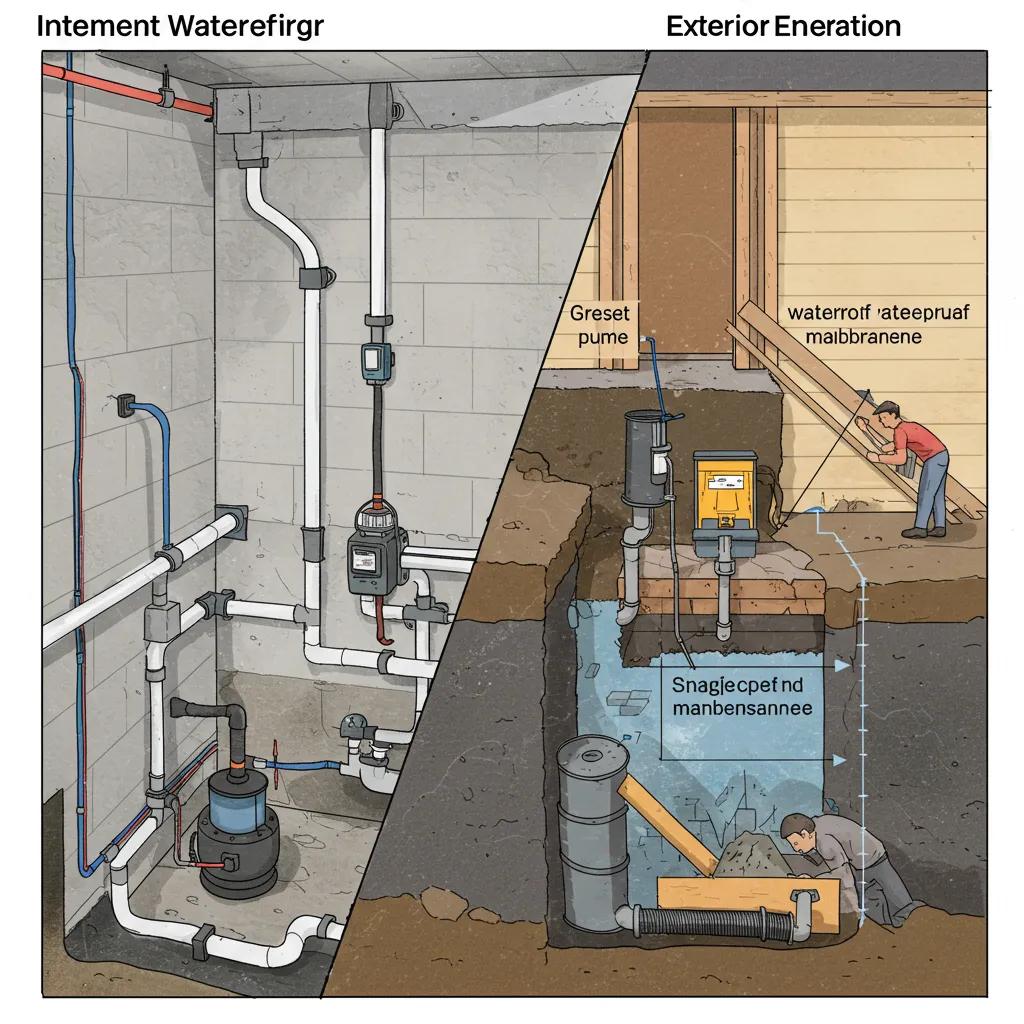
Interior and exterior methods approach the same problem from opposite directions: interior systems manage water once it breaches the wall, while exterior systems prevent water from reaching the foundation. Interior approaches typically use perimeter channels, sump pumps, and sealants that collect and remove water from within, offering less invasive installation and lower upfront cost. Exterior solutions — excavation, membranes, and exterior French drains — are more invasive and costly initially but often deliver longer-term protection by eliminating soil-to-wall contact and reducing hydrostatic pressure. Choosing between them depends on the water entry mechanism, access constraints, and long-term value considerations; hybrid strategies that combine interior drainage with selective exterior work can be cost-effective in many Dayton settings.
This comparison helps homeowners weigh invasiveness, cost, and longevity. In Dayton, where hydrostatic pressure and clay soils can be problematic, exterior work often yields more durable outcomes, but interior systems paired with reliable sump pumps remain a practical first-line solution when excavation is impractical.
What Interior Waterproofing Solutions Are Most Effective for Dayton Homes?
Interior systems effective in Dayton include perimeter drainage channels tied to a reliable sump pump, targeted crack injection, and institutional-grade waterproof coatings or vapor barriers for humidity control. Perimeter drains collect water entering at the footing level and transport it to a sump pit where an automatic pump discharges it away from the foundation; this reduces interior seepage and stabilizes indoor humidity. Crack injection with polyurethane or epoxy seals active leaks and restores structural continuity in many cases, while vapor barriers and interior coatings reduce condensation and efflorescence on concrete surfaces. Regular maintenance—especially sump pump testing and backup power considerations—ensures these interior measures continue to perform through Dayton’s seasonal cycles.
What Exterior Waterproofing Techniques Protect Dayton Basements Best?
Exterior techniques that deliver lasting protection include excavation to the footing, application of high-performance exterior membranes, and installation of exterior French drains that channel groundwater away from foundations. Excavation exposes the foundation so technicians can inspect footings, seal cracks externally, and apply a continuous membrane that blocks soil moisture. Proper backfill with aggregate drainage and corrective grading diverts runoff away from the structure, while exterior drain tile collects and routes groundwater to safe discharge points. Although exterior work demands higher upfront investment, it reduces hydrostatic pressure at the source and often lowers lifetime maintenance compared with interior-only remedies.
This table clarifies tradeoffs between invasiveness, longevity, and typical applications so Dayton homeowners can select an approach aligned to site conditions and budget.
How Much Does Basement Waterproofing Cost in Dayton, Ohio?
Basement waterproofing costs in Dayton vary by system type, damage severity, and access complexity; understanding typical ranges helps set realistic expectations during bidding. Interior systems such as perimeter drains and sump pump installations generally have lower upfront costs and quicker installation timelines, while exterior excavation, membrane application, and major foundation repair involve higher investment but often greater longevity. Key cost drivers include basement square footage, the extent of structural repairs needed, soil conditions that complicate excavation, and the quality of materials and warranties chosen. Comparing written estimates for scope, materials, warranty coverage, and maintenance requirements enables homeowners to evaluate lifecycle value rather than only initial price.
Cost transparency matters: request itemized estimates that separate diagnostics, repairs, materials, labor, permits, and contingency allowances. Comparing itemized bids highlights where trades overlap and helps homeowners avoid under-scoped proposals that lead to change orders.
What Factors Influence Basement Waterproofing Prices in Dayton?
Several Dayton-specific factors influence price: soil composition and groundwater depth that affect excavation complexity, the basement footprint and ceiling height that determine material quantities and labor time, and access constraints that increase mobilization costs for heavy equipment. Structural issues such as significant foundation settling or widespread cracking require foundation repair specialists and raise costs substantially. Additionally, permit requirements, the need for temporary landscaping restoration, and the selection of higher-grade membranes or pumps with extended warranties will increase initial expenditure but can reduce lifecycle costs. Seasonal scheduling and contractor availability also influence timing and price estimates in the local market.
How Do Interior and Exterior Waterproofing Costs Differ in Dayton?
Interior systems generally cost less upfront than exterior excavation because they avoid digging and heavy site restoration, and they offer faster turnaround for resolving active leaks. Exterior systems incur higher initial costs due to excavation, backfill, and landscape restoration but frequently provide superior long-term protection by preventing water contact with foundation walls. A hybrid approach—using interior drainage to stop immediate seepage and targeted exterior work for the most vulnerable wall sections—can balance upfront affordability and long-term durability. Evaluate each estimate for total lifecycle cost, accounting for pump maintenance, warranty terms, and projected service intervals to choose the most cost-effective approach for your Dayton property.
What Role Do Customer Reviews and Warranties Play in Choosing Dayton’s Best Waterproofing Companies?
Customer reviews and warranty terms are practical proxies for workmanship quality and post-installation support; they reduce hiring risk and clarify expectations for performance and longevity. Reviews with project photos and timelines reveal how contractors handle discovery, scope changes, and cleanup. Warranty documentation should specify labor and product coverage lengths, transferability, and conditions that void coverage; strong warranties paired with proof of insurance signal a contractor willing to stand behind their work. Combining verified reviews, documented warranties, and transparent contracts helps homeowners compare not just price, but the probability of durable outcomes and responsive service if issues emerge.
- Look for recent, project-specific reviews showing before/after photos and resolved issues.
- Verify the presence of written labor and product warranties with explicit terms.
- Ask for proof of insurance and documented references for similar Dayton projects.
These checks reduce the risk of hiring a provider who relies on temporary fixes and instead favor contractors committed to long-term solutions and customer satisfaction.
How Do Dayton Homeowners Rate Their Basement Waterproofing Contractors?
Homeowner ratings often hinge on communication, adherence to schedule, and the longevity of fixes rather than only initial cost. Positive signals include detailed pre-installation diagnostics, transparent change-order policies, cleanup practices, and follow-up responsiveness for warranty service. Negative patterns in reviews typically involve incomplete scopes, unclear warranty terms, or recurring leaks after work completion. Interpreting reviews requires attention to consistency across multiple jobs and to whether a company resolves complaints professionally; these factors are more predictive of a good outcome than single-score ratings.
What Warranty and Insurance Protections Should You Expect?
Homeowners should expect a combination of labor and product warranties that clearly define coverage periods, performance expectations, and conditions that void protection. Reasonable expectations include a labor warranty that covers workmanship for a documented period, product warranties from manufacturers that cover membrane or pump failures, and clarity on whether warranties are transferable upon home sale. Insurance protections should include general liability and workers’ compensation to protect homeowners during construction. Requesting written warranty documents and certificates of insurance before work begins protects homeowner interests and establishes clear recourse paths if defects appear.
This table helps homeowners compare bid terms and prioritize contractors who provide transparent, meaningful protections.
How Can You Get a Free Estimate and Consultation from Dayton’s Leading Waterproofing Experts?
Scheduling a free estimate typically follows a clear four-step process that produces a documented diagnosis and a written plan tailored to your basement’s condition. First, provide basic property details, symptoms, and photographs to allow initial screening. Second, schedule an on-site inspection where a qualified technician assesses interior and exterior conditions, performs moisture diagnostics, and documents findings. Third, receive a written estimate that outlines recommended systems, itemized costs, timelines, and warranty terms. Fourth, review the proposal, ask clarifying questions about maintenance and expected performance, and schedule work when ready.
- Provide property details and symptoms up front to speed the diagnostic process.
- Expect an on-site inspection with moisture measurements and photographic documentation.
- Request a written, itemized estimate that ties recommended services to specific problems.
DW Basement Waterproofing explicitly offers free estimates and follows a consultative process that includes inspection, diagnosis, and written recommendations. While maintaining focus on education and comparison, homeowners can use such free consultations to compare scopes, warranties, and projected lifespans when choosing a Dayton contractor.
What Is the Process for Scheduling a Free Basement Waterproofing Estimate in Dayton?
To schedule an effective free estimate, start by collecting basic information: property age, basement symptoms (seepage, active leaks, odor), and any visible foundation damage. Contact providers to request an on-site inspection and describe the issue so the contractor can prepare appropriate diagnostic tools. During the visit, expect moisture readings, wall and floor inspections, and photographic documentation that the contractor will use to produce a written estimate. Finally, evaluate the estimate for clarity on scope, materials, labor, exclusions, permits, and warranty—these elements determine the trustworthiness of the proposal and guide a confident selection.
Why Choose DW Basement Waterproofing for Your Dayton Home?
DW Basement Waterproofing is presented as a local, licensed, and insured contractor with a comprehensive suite of basement waterproofing services tailored to Dayton’s conditions. The company emphasizes more than 20 years of experience, offers free estimates and flexible payment plans, and focuses on quality workmanship and customer satisfaction. Their service menu covers interior and exterior waterproofing methods, sump pump installation, crack sealing, waterproof coatings, excavation, drainage systems, foundation repair, and crawl space encapsulation. For Dayton homeowners seeking a single-provider approach that pairs local knowledge with a full-service capability, DW’s stated credentials align with the practical selection criteria outlined earlier.
Frequently Asked Questions
Conclusion
Choosing the right basement waterproofing contractor in Dayton ensures that your home is protected from water damage, preserving its structural integrity and indoor air quality. By understanding local challenges and evaluating service offerings, homeowners can make informed decisions that lead to long-lasting solutions. Take the next step in safeguarding your basement by requesting a free estimate from a trusted provider today. Explore your options and invest in a waterproofing solution that meets your specific needs.